
Shop By Category
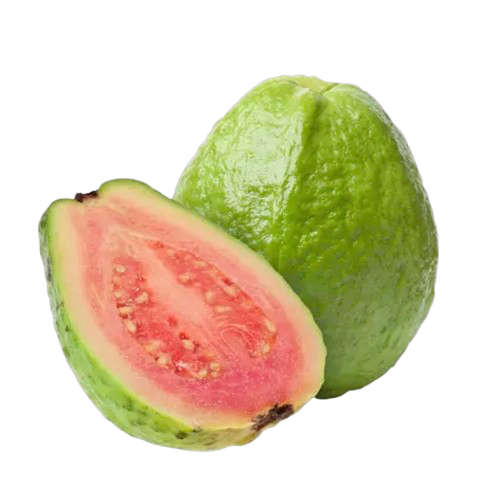
Fresh Guava
In stock
Only 16 left
SKU
EM3157
£0.99
Quick Overview
Guava is a tropical fruit that is native to central and South America, Mexico, West Africa and the Caribbean. It is a member of the myrtle family and grows on the Psidium guajava tree.
Nutrition
Guavas are a good source of vitamin C, vitamin A, and lycopene
Depending on the variety, location, and treatment after harvest, guavas can contain up to 1,044 milligrams of vitamin C per 100 grams
Taste
- Guavas have a sweet, aromatic flavor with notes of pineapple, papaya, banana, and lemon
- Some say the flavor is similar to a cross between a strawberry and a pear
Appearance
- Guavas are round or oval in shape and can be 4–12 centimeters long
- The skin can be green, yellow, maroon, or light green
- The flesh can be white, pink, or deep red
- The flesh has a texture similar to a banana or apple
Country of Origin
Colombia, Brazil, Indonesia, India, Africa, Mexico or St Lucia .
Preparation and Usage
- You can cut a guava in half and scoop out the flesh with a spoon
- You can also slice a guava into wedges like an apple
Leave to ripen at room temperature or warmer. Once the fruit has started to soften and the aroma is stronger, the fruit is ready to be washed and eaten. The fruit may be eaten whole or the seeds and skin can be discarded.
- Guavas are a popular ingredient in ice cream and juice
Guava flesh can be used in cooking and drinks
- You should wash the entire guava, as the rinds are actually edible. Using a knife, slice your guava in half or into thinner slices. You can either eat the whole guava (rind and all) or scoop out the insides. Either way, you’re in for a delicious treat. Some people like to put seasonings on their guavas like soy sauce, salt, sugar, or even vinegar.
Storage
Keep the pink guava at room temperature or warmer.
Return to
Checkers - Afro Caribbean Store.
27 The Hyde
Stevenage,
SG2 9SD.
Write Your Own Review